Introduction: Preparing for IVP and POL-ITE
For many polytechnic, ITE, and university students in Singapore, the Institute-Varsity-Polytechnic (IVP) Games and Polytechnic-ITE (POL-ITE) Games are the highlight of the year. These competitions bring together some of the best Taekwondo athletes in the country, testing skill, stamina, and mental toughness.
If you’re aiming to compete and medal at IVP or POL-ITE, you’ll need more than regular training. Success comes from a focused strategy that sharpens your technique, conditions your body, and prepares your mind for the pressure of competition.
Here are five training strategies every competitive Taekwondo athlete needs.
1. Build Sport-Specific Conditioning
Taekwondo is explosive, fast-paced, and requires both endurance and power. General fitness isn’t enough, you need sport-specific conditioning.
- Interval training (short sprints, high-intensity rounds) builds stamina for kyorugi matches.
- Plyometric exercises (box jumps, jump squats) improve leg power for fast kicks.
- Core strength work supports balance during poomsae and stability in sparring.
Athletes who excel at IVP and POL-ITE often have a conditioning programme, so start integrating these workouts early.
2. Sharpen Your Poomsae Precision
For poomsae competitors, precision and expression matter just as much as strength. Judges look for:
- Accuracy in stances, blocks, and strikes.
- Consistency — movements that look crisp from start to finish.
- Presentation — focus, breathing, and rhythm that demonstrate control.
One way to level up is to record your poomsae practice and review frame by frame. Small adjustments in angle, timing, or posture can mean the difference between an average score and a medal-winning performance.
3. Train Smart for Kyorugi (Sparring)
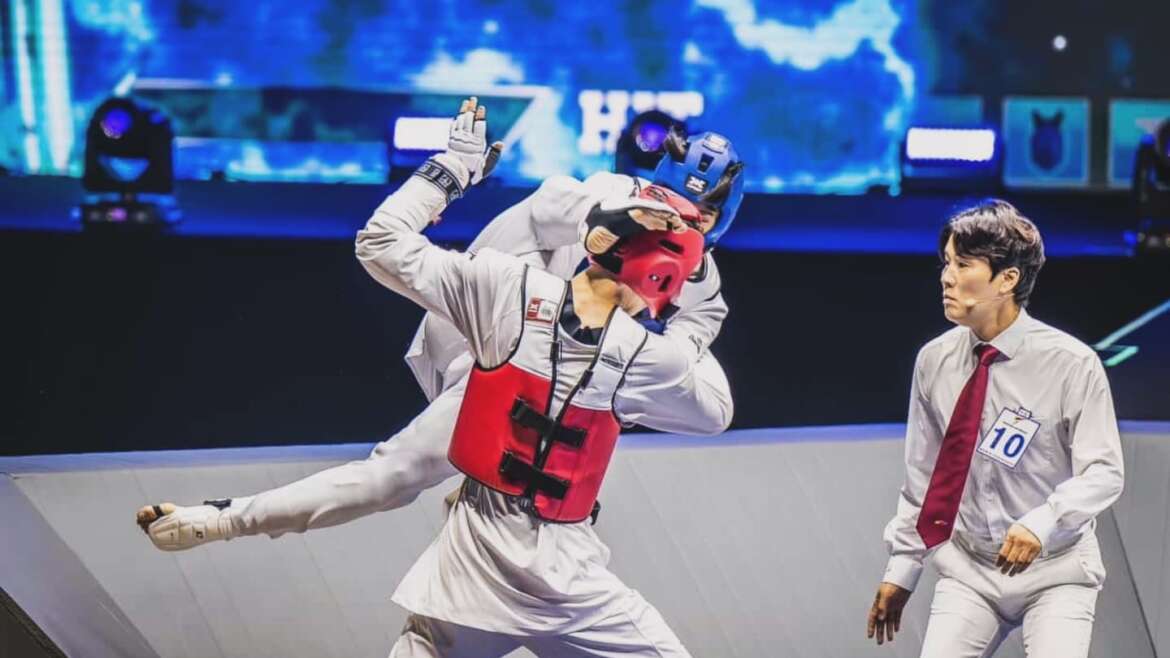
Kyorugi athletes need speed, timing, and mental sharpness. To prepare:
- Work on reaction drills — partner cues, paddle taps, or random commands that sharpen timing.
- Master on-mat management — learn how to cut off space, manage distance, and control pace.
4. Prioritise Recovery and Injury Prevention
Athletes often overlook recovery, but consistent training only pays off if you stay injury-free.
Remember: an injured athlete can’t compete. Building smart recovery into your routine is as important as hard training.
- Stretch and mobility drills reduce the risk of strains, especially in hamstrings, hips and knees.
- Foam rolling or sports massage help with muscle recovery after intense sparring.
- Balanced nutrition and hydration fuel training and speed up repair.
5. Train the Mind as Much as the Body
Competitions like IVP and POL-ITE are high-pressure environments. Mental preparation is key:
- Visualisation — rehearse your poomsae or match plan in your mind before stepping onto the mat.
- Breathing techniques to stay calm before and during matches.
- Confidence building — track small wins in training to build belief for the big day.
Conclusion: Train with Purpose, Compete with Confidence
Whether you’re aiming to represent your polytechnic, ITE, or university at the POL-ITE Games or the IVP Games, success doesn’t come by chance. It comes from structured, purposeful training that develops body, technique, and mindset.
At Johan Taekwondo, we’ve guided students through every level of competition — from first-timers to medalists. With tailored programs focusing on sparring, poomsae, and competition prep, we’re here to help you bring your best to the mat.
👉 Ready to take your training to the next level? Join our competition team and get IVP/POL-ITE ready with Johan Taekwondo!